
Stuck around 1,000 points? Stop moving randomly and keep your largest cupcake in one corner. I usually recommend the bottom-left: favor left and down when they protect that tile, then arrange the next-largest cupcakes nearby. This won’t guarantee 5,000 points in every run, but it gives you a plan instead of a board full of accidental merges.
I’m Colon, and the habit I’d fix before anything else is swiping just because a move is available. Before every move, check three things: where your largest cupcake will end up, whether any matching cupcakes can merge usefully, and how many empty cells will remain. That quick scan helps you avoid moves that feel productive but leave the board harder to manage.
1. Pick One Corner and Protect It
A corner gives your biggest tile a predictable home. Choose the bottom-left corner and try to keep your largest cupcake touching both the left and bottom edges. When you need to move, check whether the swipe will pull it into the middle; if it will, look for another move that combines tiles or opens space without breaking the anchor.
Don’t panic if the board doesn’t look perfectly ordered every turn. The goal is to preserve a useful structure, not to make every tile sit in a perfect line. If the largest cupcake drifts away from the corner, pause and plan a route back instead of swiping in several directions at random.
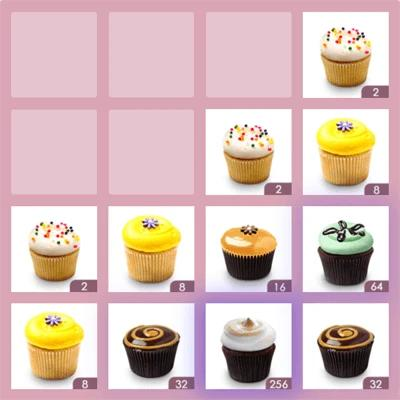
Keep this quick visual guide open while you play. It covers the corner anchor, tile order, useful merges, and board-space management.
WordPress note: upload the SVG to your Media Library if your site permits SVG uploads, then replace both file references above with the uploaded file URL. If SVG uploads are blocked, convert the supplied SVG to PNG before uploading.
2. Use Left and Down as Your Default Moves
With the bottom-left corner as your anchor, left and down are often the easiest directions to evaluate. They can keep the largest tile against the edges while bringing smaller tiles together. They are not automatic answers, though: if a swipe fills the board or separates a useful pair, choose a different move.
Before pressing a key, trace what will slide across each affected row or column. Check which tiles will meet, where a new tile could appear, and whether your largest cupcake stays anchored. This takes a moment, but it is more reliable than repeatedly correcting a bad move afterward.
3. Keep the Next-Largest Tiles Close
Your largest cupcake needs useful neighbors. Try to keep the next-largest tiles in nearby rows or columns so you can combine smaller tiles toward the anchor instead of building a high-value tile on the opposite side of the board. Avoid moving a large tile away just to make a small merge elsewhere.
The exact layout changes as tiles slide, so think in terms of priority rather than a fixed pattern: largest tile in the chosen corner, next-largest tiles near it, and smaller tiles positioned where they can feed into the sequence. If a move breaks that order, make sure it creates enough space or a useful merge to justify the trade-off.
4. Don’t Merge Just Because You Can
A merge is helpful when it improves the board. Combining two matching cupcakes may free a cell, but the resulting tile can also land in a spot that blocks your next move. Before merging, look at the row or column around the pair and ask whether the result will support your corner plan.
If two matching cupcakes sit near the top while your largest one is anchored at the bottom-left, don’t automatically swipe up. Check whether the move dislodges your anchor or traps smaller tiles. A smaller merge can wait if making it now damages the structure you need for later.
5. Protect Empty Cells
Empty cells are room to maneuver. When the board gets crowded, you have fewer ways to bring matching cupcakes together without pushing your largest tile out of position. After each move, count the open cells roughly and notice whether the move created space or simply shifted the problem somewhere else.
Try to choose moves that combine a pair and leave a useful gap. Avoid shuffling tiles back and forth without a plan, because those moves can fill the board while doing little to improve the order. If you have two possible moves, compare the resulting space before choosing.
6. Learn the Cupcake Evolution Order
Classic 2048 shows numbers; 2048 Cupcakes uses cupcake designs to represent tile stages. Learn which matching cupcakes combine into the next stage in the version you’re playing. Recognizing the sequence quickly makes it easier to spot pairs and plan several merges ahead instead of stopping to guess what each picture represents.
Don’t rely on decoration or apparent size alone to infer a cupcake’s value. Use the game’s displayed sequence or test a known matching pair to confirm what comes next. Once you recognize the stages, apply the same board strategy you would use with numbered tiles.
7. Avoid Filling a Row With Tiles in the Wrong Order
A row can look full and still be useful, but tiles in an awkward order may block merges you need. With the largest cupcake at the bottom-left, pay attention to the bottom row and the column beside it. Try to keep smaller tiles from separating pairs that you want to combine later.
Before swiping, check whether the move preserves the relative order of important tiles. If a smaller tile is blocking a useful pair, see whether you can move it safely or merge it elsewhere first. Don’t move every tile to one side just because the animation looks tidy.
8. Use Up and Right With a Reason
Up and right aren’t forbidden; they just need more thought when your anchor is in the bottom-left. Use one when it creates a valuable merge, clears a blocker, or gives you space that you can’t get with left or down. Avoid using it as a reflex after every move.
When you do need to swipe up or right, check the board afterward before making another move. If the largest cupcake has shifted away from the corner, prioritize restoring a stable layout. One deliberate move is easier to recover from than several quick swipes that scatter your tiles.
9. Review Why the Board Became Stuck
A low-scoring run is more useful when you can identify the move that made the board difficult. After a game ends, look back at the last few moves: did the largest cupcake leave its corner, did you fill the remaining spaces, or did you merge a pair that wasn’t helping your layout? Pick one cause to work on in the next run.
Don’t change every part of your strategy at once. If you keep losing the corner, focus on protecting it for a few games. If the board fills too quickly, focus on preserving empty cells. Changing one habit at a time makes it easier to tell whether your decisions are improving.
10. Track Your Progress Toward 5,000 Points
To work toward 5,000+ points, record the final score, the largest cupcake reached, and the main reason the board became crowded. Compare several rounds played with the same corner strategy before deciding whether a change helped. A single high or low score doesn’t prove that a tactic works consistently.
Set a process goal for the next run instead of forcing a score: keep the largest tile anchored for longer, preserve more open cells, or avoid unplanned swipes. Those are decisions you can control. The final score is useful feedback, but it shouldn’t be the only thing you review.
Quick checklist before every swipe
- Will my largest cupcake stay in or move closer to its chosen corner?
- Does this move create a useful merge or preserve space?
- Will it separate tiles I need to combine later?
- Can I explain why this move is better than the alternatives?
Frequently Asked Questions
How do I get a higher score in 2048 Cupcakes?
Keep your largest cupcake in one corner, arrange the next-largest tiles nearby, and preserve empty cells for future merges. Check the board before each swipe instead of making moves just because a pair is available. No strategy guarantees a specific score every run.
Which direction should I move in 2048 Cupcakes?
If you use the bottom-left corner strategy, left and down are useful default directions when they protect your largest tile and improve the layout. Use up or right when you have a clear reason, such as making a valuable merge or clearing a blocker.
Does the corner strategy guarantee 5,000 points?
No. The corner strategy helps organize the board, but tile spawns and individual move choices still affect each run. Use it alongside space management and post-game review to improve your decisions over time.
Try the Strategy in Your Next Run
I’m Colon, and my advice is to stop chasing every merge and start controlling the board. Pick a corner, keep your largest cupcake anchored, and make every swipe serve a purpose. Try these ten habits in your next game and track which one makes the biggest difference to your play.
Editorial note: Replace the “data pending” example with your own gameplay screenshot or recorded result before publishing if you want to present first-hand evidence.