
Understanding
2048 Cupcakes
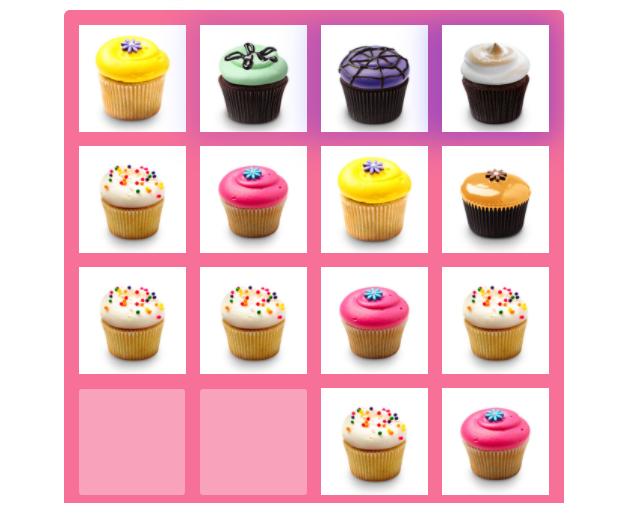
2048 Cupcakes brings the classic 2048 puzzle format into a colorful cupcake-themed experience. The rules are simple to learn, but each move becomes more important as the board fills and higher-value cupcakes begin to appear.
This gameplay guide is designed to help players understand how Cupcakes 2048 works beyond the basic controls. From moving and merging cupcakes to managing empty spaces, protecting your highest tile, and building toward the 2048 White Chocolate Peppermint cupcake, every part of the game depends on making the right move at the right time.
Whether you are learning the cupcake game for the first time or looking for a more consistent way to reach higher cupcakes, this 2048 cupcake guide provides practical gameplay information to help you make better decisions throughout every stage of the board.
Understanding the 2048 Cupcakes Board
The game board is a 4×4 grid that starts empty. Your goal is to create the highest possible tile by combining matching numbers. The classic goal is 2048, but the real fun comes from exploring higher tiles like 4096, 8192, and beyond.
Every new game begins with two random tiles (usually 2 or 4) appearing in random empty spots. Each cupcake tile has its own theme and calorie value:
Basic Controls
You control the game using only your keyboard arrow keys:
- Up Arrow – Move all tiles upward
- Down Arrow – Move all tiles downward
- Left Arrow – Move all tiles left
- Right Arrow – Move all tiles right
Each move creates exactly one new tile (2 or 4) in a random empty spot. The game ends when the board is completely full and no two tiles can be merged.
2048 Cupcakes Scoring
Scoring works based on merges, not the tiles sitting statically on the board.
- Core rule: Points are added when two tiles merge. You gain points equal to the value of the newly created cupcake tile.
Example: Merge two 1024 cupcakes → create a 2048 tile, earn 2048 points. - The Kcal counter is a separate, fictional tracker. It sums the calorie value of every new tile you create during merges. It does not affect your game score or win condition.
- The highest score comes from making large, late-game merges. Small early merges add minimal points; the big point jumps happen when combining 512, 1024 and 2048 tiles.
- Important: Moving tiles around without any merge gives zero points. Plan moves to trigger merges whenever possible, but never force a merge that breaks your board structure.
How to win 2048 Cupcakes
This is the core winning strategy, practical and step-by-step:
- Pick one corner and lock your largest cupcake there. Most players choose bottom-right or bottom-left. Never move your highest tile out of this corner unless you have no other legal moves.
- Build a descending chain along the edge row. Place the second-largest tile next to your corner tile, then the third largest, and so on. Example (bottom row): 2048 | 1024 | 512 | 256.
- Limit your movement directions. If your anchor is in the bottom corner, use left and down as your primary moves. Only swipe up or right when you have no other option. This prevents your big cupcake from being pushed into the centre.
- Merge smaller tiles first. Grow low-value cupcakes (2,4,8,16) in the open side of the board, then feed them into your main chain. Avoid randomly merging big tiles in the centre.
- React to bad spawns. If a new 2 or 4 tile lands in your main chain, clear it immediately before it blocks your high-tier cupcakes.
- Win condition: Once you create the 2048 white chocolate peppermint cupcake, you complete the main goal. You may continue playing to chase 4096 and the legendary 8192 Rainbow cupcake.
How to Manage Empty Spaces
Empty cells are your most valuable resource. The game ends when the grid is full and no two adjacent tiles can merge.
- Keep minimum 2–3 empty cells at all times during mid-game. 4 empty cells is ideal. Fewer than 2 empty cells puts you at high risk of game over on the next random spawn.
- Prioritise moves that create empty cells. When multiple moves are available, choose the one that consolidates tiles and frees up blank squares, not just the move that gives points.
- Avoid filling the centre of the board. Reserve the centre for small tiles. Keep your large cupcakes along one edge or corner.
- If your board is almost full: Stop chasing points. Look for small merges to reduce tile count and restore empty space. Sometimes you must accept a small merge to avoid immediate game over.
- Risk warning: A random 2 or 4 tile can spawn in any blank cell. Fewer empty spaces mean higher chance the new tile blocks your planned merge path.
Managing 256, 512 and 1024
These mid-to-high tier cupcakes are where most players lose games. They are too large to casually merge and too small to be your corner anchor.
- Keep them ordered in your edge chain. Your sequence should follow descending order: 1024 next to the corner 2048, followed by 512, then 256. Do not let a 256 sit between 1024 and 512, which breaks your merge pipeline.
- Do not create isolated 512 or 1024 in the board centre. A big tile stuck in the middle will block movement and quickly eat up empty spaces.
- Pair them early. When you have two 256 tiles, prepare a clear path to merge them into 512 before building more 256s. Avoid stacking multiple unpaired high-tier cupcakes.
- Protect the 1024 tile. Once you have 1024, treat it as your primary anchor before you reach 2048. Avoid swipes that will shift it away from the edge.
- Slow down when you have 512 + 1024 on the board. Every move carries higher risk. Think ahead: check where the new tile will spawn and whether it will block your chain.
- Common mistake: Players rush to merge 256s and create multiple 512s with no clear path to combine them. This fills the board quickly and kills your run.
How to Manage Empty Spaces
Empty cells are your most valuable resource in 2048 Cupcakes. Aim to maintain 3–4 open cells on the 4×4 grid whenever possible. Having several blank spaces gives your existing cupcakes more room to move and gives newly spawned tiles a better chance of appearing in positions you can use.
Ideal open space: Try to keep around 3–4 empty cells during normal play. When the number drops to 2 or fewer, start looking for moves that actively create new space.
When 2 or Fewer Cells Remain
Once your empty-cell count drops to 2 or fewer, enter cleanup mode. Prioritize moves that create useful merges and free additional cells. Do not choose a swipe simply because it produces a small merge if the resulting board becomes more crowded or scatters your low-value cupcakes. The goal is to restore movement options before continuing to build higher cupcake tiers.
New low-value cupcakes spawn randomly on blank cells after every valid move. Because you cannot control exactly where the next 2 or 4 cupcake will appear, protect useful empty zones around your main tile structure. Keeping these areas available makes newly spawned cupcakes easier to combine instead of allowing them to become awkward blockers beside your highest-value cupcake.
Keep your highest-value cupcake in its planned position and avoid moves that scatter your main row or column just to gain a small merge.
When several moves are available, favor the move that preserves more empty cells while keeping your larger cupcakes organized.
When the board becomes crowded, consolidate isolated 2, 4, 8, or 16 cupcakes first to reclaim useful blank cells.
Avoid making a swipe purely for a small merge if it will scatter tiny cupcake tiles across the grid and block your main ordered row or column. A merge is useful when it improves the board’s structure, not simply because the number on one cupcake becomes larger.
If you have multiple possible moves, compare the board after the merge and after the new tile appears, rather than judging the move only by its immediate result. A move that creates one merge but leaves no useful follow-up can be worse than a quieter move that preserves several empty cells and keeps matching cupcakes close together.
A board with zero empty cells and no adjacent matching cupcakes leaves you with no legal move and ends the game. Proactive space management helps prevent this situation. Even when your high-tier cupcake chain is still intact, a crowded board can quickly become unrecoverable if you have no room to reposition or merge smaller tiles.
Common Tile Mistakes to Avoid
In 2048 Cupcakes, players often lose not from bad luck of new cupcake tile spawns, but from predictable tile positioning mistakes on the 4×4 grid.
Merging Cupcakes Whenever a Match Appears
The first mistake is merging cupcakes whenever a match appears. Many players rush to combine identical cupcake tiles just to gain points, even if the move will push your highest-tier cake tile out of its corner anchor. This breaks your descending-value chain along the edge and scatters mid-tier cupcakes across the board, making future merges much harder. Only perform merges that preserve your corner anchor or clear blocking small tiles.
Letting Your Largest Cupcake Tile Leave the Corner
Second, letting your largest cupcake tile leave the corner. Corners are the safest zone for your biggest cake tile, as it can only shift if you swipe toward it. Repeated careless swipes knock high-value tiles into the center; once the wedding cake tile sits in the middle, it gets trapped by random newly spawned small cupcake tiles. Stick to one fixed corner and avoid swiping in the direction that displaces this anchor unless no other move exists.
Overfilling the Center Grid With Medium Cupcake Tiles
Third, overfilling the center grid with medium cupcake tiles. The center should be temporary space for small tiles, not a home for 128 or 256 cupcakes. Stacking mid-tier tiles in the middle blocks edge merging routes. Keep higher cupcakes lined along one edge in descending order, and reserve the center for newly spawned small tiles.
Ignoring the New Tile Spawn After Every Swipe
Fourth, ignoring the new tile spawn after every swipe. Every move generates a random small cupcake tile in an empty cell. Players often plan only the current merge and forget this spawn. A new tile can land between matching cupcakes, block your planned chain, or fill your last empty grid cell and end the game. Always visualize where a new tile might pop up before swiping.
Freely Using All Four Swipe Directions
Fifth, freely using all four swipe directions. Constantly swiping up, down, left and right randomly disrupts your ordered tile layout. Limit your main movement to 2–3 directions and restrict the risky direction that moves your anchor tile. Uncontrolled four-way swiping quickly creates isolated cupcake pairs with no path to combine.
2048 Cupcakes Gameplay FAQ
Why did my large cupcake move out of the corner?
Your biggest cupcake shifts out of the corner when you swipe in a direction that forces all tiles to slide. For example, if your largest tile sits in the bottom-right corner, swiping right or down is safe. Swiping up or left will push it away if there is empty space on that side. This usually happens when you rush moves without checking the board first. Always preview how your swipe will shift your anchor tile before moving.
Should I always merge when I can?
No. Merging just because you see a match is one of the most common mistakes. Some merges will break your ordered tile chain, fill up the board too quickly, or push your largest cupcake away from its corner. Only perform merges that advance your main strategy. Skip low-value merges if they risk destroying your board layout.
How many empty spaces should I try to keep?
Aim for a minimum of 2–3 empty cells during mid-game. 4 empty cells is ideal. If you drop down to only 1 empty cell, the next randomly spawned 2 or 4 tile can easily block your merges and end your game. When empty cells are scarce, focus only on small merges to free up space, ignore scoring opportunities temporarily.
When should I stop making fast moves?
Slow down once you build your first 256, 512 or 1024 cupcake. At this stage every swipe can permanently break your corner setup. Also pause when your board has fewer than 3 empty spaces, or when new tiles keep spawning inside your main tile chain. Never rush when working on high-tier cupcake merges.
Why is 512 harder to build than 256?
You need two fully formed 256 cupcakes to create a 512. Each 256 takes many small merges to build, and they take up more board space. Multiple unpaired 256 tiles quickly fill the grid, leaving fewer empty cells. A stray 2 or 4 tile can easily block your path to combine them, making 512 much riskier to produce than 256.
What should I do when two large cupcakes are separated?
First, stop making unnecessary moves. Look for a clear path to slide them together without disrupting your corner anchor. If there is no safe path, create small merges to clear blocking tiles and free empty cells. If moving them risks shifting your biggest cupcake out of the corner, delay this merge until a safer moment. Avoid forcing them together at the cost of your whole board structure.
Can I recover after breaking my corner strategy?
Yes, recovery is possible, but it is difficult. Immediately stop aggressive merging. Try to re-establish your largest tile into a new corner, then rebuild your descending tile chain along the edge. Clear small blocking tiles one by one and preserve empty spaces. If the board is already crowded with many unpaired high-tier cupcakes, recovery may not be possible and you may need to restart the game.